
Las Vegas Airport Rental Car vs. Rideshare: Group Guide
Las Vegas Airport Rental Car vs. Rideshare: Group Guide
For a compact Strip or Downtown stay, rideshare and transit are often simpler than collecting and parking a vehicle. Choose a Las Vegas airport rental car vs rideshare when the itinerary includes Red Rock Canyon, Lake Mead, family visits, equipment, several off-Strip stops, or a group that would otherwise split across multiple vehicles.
That is the practical answer. The right choice depends less on the first ride from Harry Reid International Airport and more on what happens after check-in: where the group will sleep, how many bags must move, and how often the plan leaves the main visitor corridor.
This guide compares the LAS pickup paths, car-free stays, off-Strip rental plans, split rentals, vehicle sizes, and the costs travelers often forget. Pickup zones, construction, routes, parking terms, counter hours, fares, and vehicle availability can change, so recheck them for the actual travel dates.
Key takeaways
- Use rideshare, taxi, or transit when the hotel and most activities stay within one well-connected Strip or Downtown zone.
- Choose a rental when Red Rock Canyon, Lake Mead, Boulder City, suburban visits, or repeated off-Strip stops anchor the trip.
- Consider a split rental when only one or two days require a vehicle.
- Count people and bags together. A vehicle with enough seats may not have enough cargo room.
- Compare the full trip: airport transfers, repeated rides, rental fees, parking, fuel, additional drivers, child seats, and the return to LAS.
The 53-word decision rule
Stay car-free when one airport transfer solves the arrival problem and most daily plans remain on the Strip or Downtown. Rent at LAS when the harder problem comes later: distant attractions, several off-Strip stops, luggage, mobility equipment, sports gear, or a larger group. Use a split rental when only one day needs wheels.
In this guide
- Compare the LAS arrival paths
- Decide when a car-free stay works
- Decide when a rental earns its place
- Test a split-rental plan
- Match the vehicle to people and luggage
- Use an all-in booking checklist
Las Vegas airport rental car vs rideshare: compare the pickup paths
Harry Reid International Airport has separate pickup processes for rental shuttles and ride apps. Save the correct instructions before landing instead of asking the group to improvise with bags in hand.
What the rental-car path involves
The airport's official Rent-A-Car Center guidance places the facility at 7135 Gilespie Street, three miles south of LAS. From Terminal 1 baggage claim, travelers follow Ground Transportation signs on Level 1 to the rental shuttle stop outside doors 10 and 11. At Terminal 3, travelers go to Ground Transportation on Level Zero and use the rental shuttle stops at either end of the terminal.
The shuttle adds a transfer before the group reaches the counter. That can be manageable, but decide whether everyone will travel to the center or one qualified driver will collect the vehicle while the others follow an agreed, permitted plan. Confirm the selected rental company's reservation, hours, driver rules, counter instructions, and return process; the airport's facility page does not guarantee that every company operates the same way.
The airport also says its rental shuttle fleet is ADA equipped and identifies special loading areas at both terminals and the Rent-A-Car Center. Travelers who need assistance should still confirm the process for their date and needs before flying.
What the rideshare path involves
LAS's ground-transportation overview places Terminal 1 ride-app pickup on Level 2 of the parking garage and Terminal 3 pickup on the Valet level of its garage. Follow the airport's current signs and the app because pickup instructions can change.
Rideshare removes the rental counter and parking commitment, but the party and luggage must fit the requested vehicle. Enter the real load: adults, children, checked bags, strollers, mobility devices, sports cases, and trade-show materials. If one vehicle cannot carry everything, include the cost and coordination of a second ride in the comparison.
Add a current airport buffer
LAS announced an Airport Connector Tunnel pavement project with lane reductions anticipated through the end of December 2026. The airport says traffic patterns and dates can change. Travelers in that window should check the current notice and leave extra time for airport returns rather than relying on an old drive-time estimate.
Stay car-free for a focused Strip or Downtown trip
A rental is not automatically the best answer just because Las Vegas is spread out. When the hotel, convention, meals, and entertainment stay in one visitor corridor, rideshare, taxi, walking, and transit can remove parking and driving work.
The Las Vegas Convention and Visitors Authority's current getting-around guide lists rental cars, rideshare, taxis, the Deuce, and the Downtown Loop among the city's options. It also warns visitors not to assume every destination on the Strip is an easy walk. Map the actual hotel entrances and stops instead of judging distance by the skyline.
The Regional Transportation Commission of Southern Nevada's August 2026 Deuce route links major Strip and Downtown stops and also serves the Harry Reid Rent-A-Car Center. Its published frequency is approximate and can change with traffic, construction, and special events, so check the current route and alerts before depending on it for a timed reservation or flight.
A car-free plan works best when:
- the group is staying in one practical Strip or Downtown zone;
- most activities cluster near the hotel or a workable transit stop;
- every traveler can manage the airport transfer and their luggage;
- the group does not need to move bulky gear repeatedly;
- occasional rides are easier than daily parking and vehicle retrieval;
- no desert, suburban, or regional day trip is central to the visit.
Run three checks before committing. First, map the airport mode to the hotel's actual entrance. Second, test the farthest planned stop and the return after the activity ends. Third, repeat the route with every traveler and bag. If those checks stay simple, a rental may add work without adding useful flexibility.
Choose a LAS rental for Red Rock, Lake Mead, and spread-out plans
A rental becomes more useful when the itinerary repeatedly leaves the Strip and Downtown or combines several distant stops in one day. It can also help when a family or group wants to keep child seats, mobility aids, coolers, uniforms, or presentation materials in one travel plan.
Travelers can compare LAS airport car and van rentals after flights and lodging are fixed. Broader Las Vegas car and van rental options may help when a city pickup fits a shorter rental, but verify the exact location, hours, class, and return terms before building the itinerary around it.
A rental works best when:
- Red Rock Canyon, Lake Mead, Boulder City, or suburban visits are core plans;
- several disconnected stops must happen on the same day;
- the hotel is outside a practical transit or walking pattern;
- the group has child seats, mobility equipment, sports gear, coolers, or event materials;
- several ride-app vehicles would be needed for the party and luggage;
- hotel and destination parking have been checked for the selected vehicle.
Red Rock Canyon is a strong example. The Bureau of Land Management's current visitor guidance describes a one-way 13-mile Scenic Drive and requires timed-entry reservations for entry between 8 a.m. and 5 p.m. from October 1 through May 31. A vehicle helps with access, but it does not replace the reservation, weather, heat, parking, and safety checks.
Lake Mead creates a similar transportation distinction. The National Park Service's directions and transportation page says public transportation does not serve the recreation area and that its entrances and attractions are spread across a large landscape. Map the exact entrance and destination; do not treat “Lake Mead” as one single stop.
Add the hidden logistics
Do not compare one rideshare quote with only a rental's headline price. Add taxes and airport fees, optional products, fuel, hotel and attraction parking, additional drivers, child seats, the rental shuttle, and the return-to-terminal process.
For a larger vehicle, verify garage clearance, loading space, maneuvering room, and permitted parking. A property that accepts standard cars may not have a practical entrance or space for a tall passenger van. Avoid driving a large vehicle on the Strip merely for sightseeing when parking and pedestrian movement can solve the same plan more simply.
Use a split rental when only one or two days need a vehicle
Many Las Vegas trips do not need one transportation mode for every day. A family can take rideshare to a Strip hotel, spend two days without a car, then collect a vehicle for Red Rock Canyon, Lake Mead, Boulder City, or family visits.
The split plan can reduce unused rental days and hotel parking work, but it adds another pickup. City rental hours, vehicle availability, one-way terms, driver requirements, luggage movement, and the return location can make it less convenient than it first appears.
Use this three-step test:
- Put every walking, transit, and short-ride activity on the calendar.
- Group every desert, suburban, or regional stop onto one or two candidate vehicle days.
- Compare the exact airport rental, city pickup, rideshare, and transit plan, including parking, transfers, operating hours, and return logistics.
If the city pickup saves parking days but requires the entire group to cross town with luggage, the airport rental may still be simpler. If an airport rental would sit untouched for most of the stay, a car-free arrival plus a shorter rental may fit better.
Three common Las Vegas scenarios
- Two adults with carry-ons and a three-night Strip stay: a car-free arrival is often the cleaner starting point when the hotel and activities map well.
- A family combining the Strip, Red Rock Canyon, and Lake Mead: a rental or planned split rental may remove repeated transfers and keep day-trip gear together.
- A 10-person convention team with cases and banners: compare one correctly sized passenger van with multiple rides, then verify cargo room, driver eligibility, hotel loading access, and parking.
These are planning patterns, not guarantees. Price and map the actual dates, hotel, party, luggage, and destinations.
Match the vehicle to people, bags, heat, and parking
Seat count is only the first filter. Airport groups may carry checked bags, strollers, mobility devices, coolers, sports gear, or trade-show materials that consume cargo room quickly.
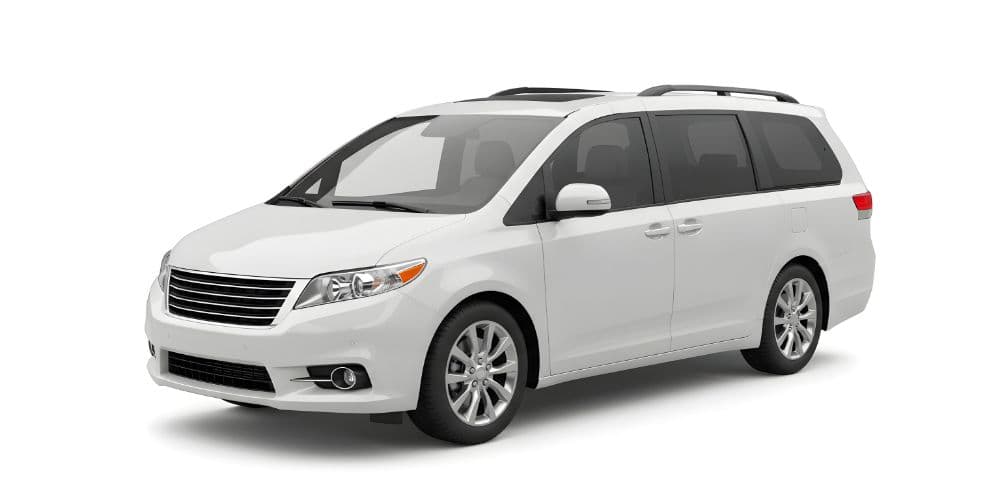
A minivan rental can balance access, passenger space, and flexible cargo room for a family or smaller group. Confirm the exact seating layout and usable luggage space for the offered vehicle.
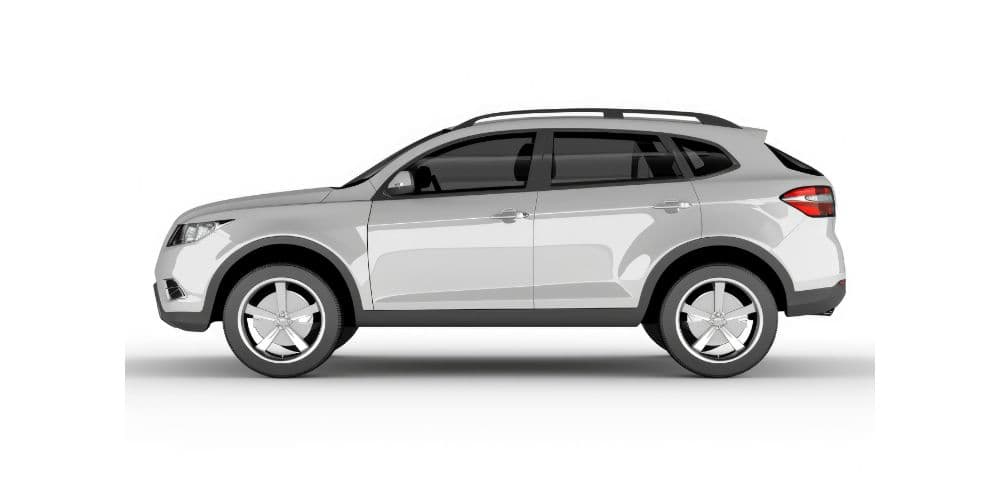
A midsize SUV rental can suit a smaller party with moderate bags. Do not assume every midsize SUV provides the same third-row seating or cargo space.
A 12-passenger van rental can keep an extended family, team, school, or church group together. Confirm driver eligibility, luggage room, hotel access, parking, and comfort with a larger vehicle.
A 15-passenger van rental is relevant for the largest groups, but it requires the closest review of luggage capacity, garage clearance, maneuvering space, driver rules, and destination access.
For some parties, two smaller vehicles are more practical than one large van. That adds a second qualified driver and another pickup, but it can simplify parking and allow the group to split its schedule. Compare both versions before deciding.
Desert heat adds another planning layer. Never leave a person, pet, medicine, electronics, food, or heat-sensitive equipment in a parked vehicle. Carry water, follow official weather and park guidance, and keep enough schedule flexibility to abandon an outdoor plan when conditions are unsafe.
Use an all-in Las Vegas arrival checklist
Before paying for any transportation plan, answer these questions:
- Are all travelers landing in the same terminal and time window?
- How many checked bags, strollers, child seats, mobility devices, and equipment cases must move?
- Does the hotel and activity plan stay in one Strip or Downtown zone?
- How many full days actually require a vehicle?
- Which Red Rock, Lake Mead, Boulder City, suburban, or regional stops would be difficult without one?
- Can the selected vehicle carry the people and their luggage at the same time?
- Does every hotel, garage, attraction, and park entrance accept the vehicle's size?
- What are the current pickup zones, shuttle instructions, route alerts, construction notices, counter hours, parking terms, and return directions?
Then plan in this order:
- Choose the hotel area.
- Mark every destination outside the main visitor corridor.
- Count travelers, bags, devices, and gear.
- Compare rideshare, transit, airport rental, and split-rental logistics.
- Choose the smallest vehicle that safely fits the complete load.
- Confirm parking, driver requirements, pickup instructions, and the airport return.
- Recheck airport, transit, road, park, rental, and hotel guidance shortly before travel.
For a compact Strip or Downtown stay, rideshare and transit are usually the cleaner starting point. For Red Rock Canyon, Lake Mead, repeated off-Strip stops, equipment, or a larger group, a LAS rental can add useful flexibility. The best Las Vegas airport rental car vs rideshare choice is the one that removes the hardest repeated transfer from the whole trip, not merely the first ride away from the airport.
Our Most Popular Vehicles

Frequently Asked Questions
Rideshare is usually simpler for a compact Strip or Downtown stay with manageable luggage. A rental is often more practical for Red Rock Canyon, Lake Mead, suburban visits, repeated off-Strip stops, equipment, or a larger group. Compare the full itinerary, including parking, repeated rides, bags, and the return to LAS.
Harry Reid International Airport's Rent-A-Car Center is at 7135 Gilespie Street. Terminal 1 travelers follow Ground Transportation signs to the rental shuttle outside doors 10 and 11. Terminal 3 travelers use the rental shuttle stops at both ends of Level Zero. Recheck airport and company instructions before arrival.
The airport currently directs Terminal 1 ride-app passengers to Level 2 of the parking garage and Terminal 3 passengers to the Valet level of its garage. Follow current airport signs and the app after landing because terminals, pickup areas, construction, and operating instructions can change.
Not necessarily. If the hotel, meals, convention, and entertainment stay in one practical Strip zone, walking, rideshare, taxi, and transit may be easier than parking a car. A rental becomes more useful when the itinerary repeatedly leaves the Strip or includes desert and regional day trips.
Tours and other arranged transportation may be available, but the Bureau of Land Management says public transportation does not extend to Red Rock Canyon. If driving, check the current timed-entry requirement, weather, heat, road conditions, parking, and group or commercial-vehicle rules before the visit.
Do not assume a simple return ride. The National Park Service says there is no public transportation to Lake Mead, and the recreation area's entrances and sites are widely dispersed. A rental or organized tour may be more dependable, but map the exact destination and verify entry, weather, road, and return plans.
A minivan often balances family access and cargo flexibility, while a midsize SUV can suit a smaller party with moderate bags. Twelve- or 15-passenger vans can keep larger groups together, but confirm luggage space, driver eligibility, garage clearance, loading access, and destination parking before booking.