Where to Stay in Denver Without a Car: Family & Group Guide
Where to Stay in Denver Without a Car: Family & Group Guide
Union Station and LoDo are usually the easiest places to stay in Denver without a car because the A Line arrives there and many downtown destinations are reachable on foot or by local transit. Downtown near the 16th Street corridor, Golden Triangle, and parts of RiNo can also work, but each adds a different last-mile or transfer decision.
That is the short answer to where to stay in Denver without a car. For a family or group, the best area is not simply the neighborhood with the most attractions. It is the hotel block that reduces the hardest movement of the trip: airport luggage, small children, mobility needs, late arrivals, or a regional day beyond central Denver.
This guide compares four useful hotel areas, explains when a car-free plan stops being practical, and shows how to add one planned vehicle day without paying for a rental that sits parked during the city portion of the trip.
Key takeaways
- Choose Union Station or LoDo for the simplest A Line arrival and the strongest all-around car-free base.
- Choose Downtown near the convention-center and 16th Street corridor when meetings, performances, and central attractions drive the itinerary.
- Choose Golden Triangle or Capitol Hill for museums and civic attractions, but map the transfer from Union Station before booking.
- Choose RiNo when arts, dining, and an A Line-accessible hotel fit the group; confirm the exact walking route because neighborhood blocks vary.
- Add a rental only when the itinerary includes Red Rocks, Golden, mountain gear, several spread-out stops, or travelers who would struggle with multiple transfers.
In this guide
- What a car-free Denver stay actually requires
- Four hotel areas for families and groups
- Signs the itinerary needs a vehicle
- How to plan a downtown stay plus one rental day
- Which vehicle size fits the group
- A hotel-and-transportation booking checklist
What “without a car” should mean for your Denver stay
A successful car-free Denver trip is not one that avoids every taxi, rideshare, or short transfer. It is one where the hotel area lets the group complete most planned days without managing a parked vehicle, daily garage access, or repeated loading and unloading.
Denver International Airport's official public bus and train guidance connects travelers to current airport transit information. For exact service on the travel date, use the RTD NextRide trip planner and review service alerts instead of relying on an old timetable.
Before choosing a neighborhood, map four movements:
- DEN to the hotel with every bag and traveler.
- The hotel to the two or three highest-priority city stops.
- The hotel to any venue used at night.
- The hotel back to DEN for the departure time.
If those four movements are simple, the group may not need a vehicle for the city portion. If they require repeated transfers, long walks with luggage, or several separate rides, a different hotel area may solve more than a rental does.
Four practical areas to stay in Denver without a car
Visit Denver's official neighborhood guide identifies Union Station as the downtown transportation hub and describes the city center as a practical place to begin. The four areas below are not interchangeable, so choose according to the group's daily anchors.
1. Union Station and LoDo: best overall for a rail-first trip
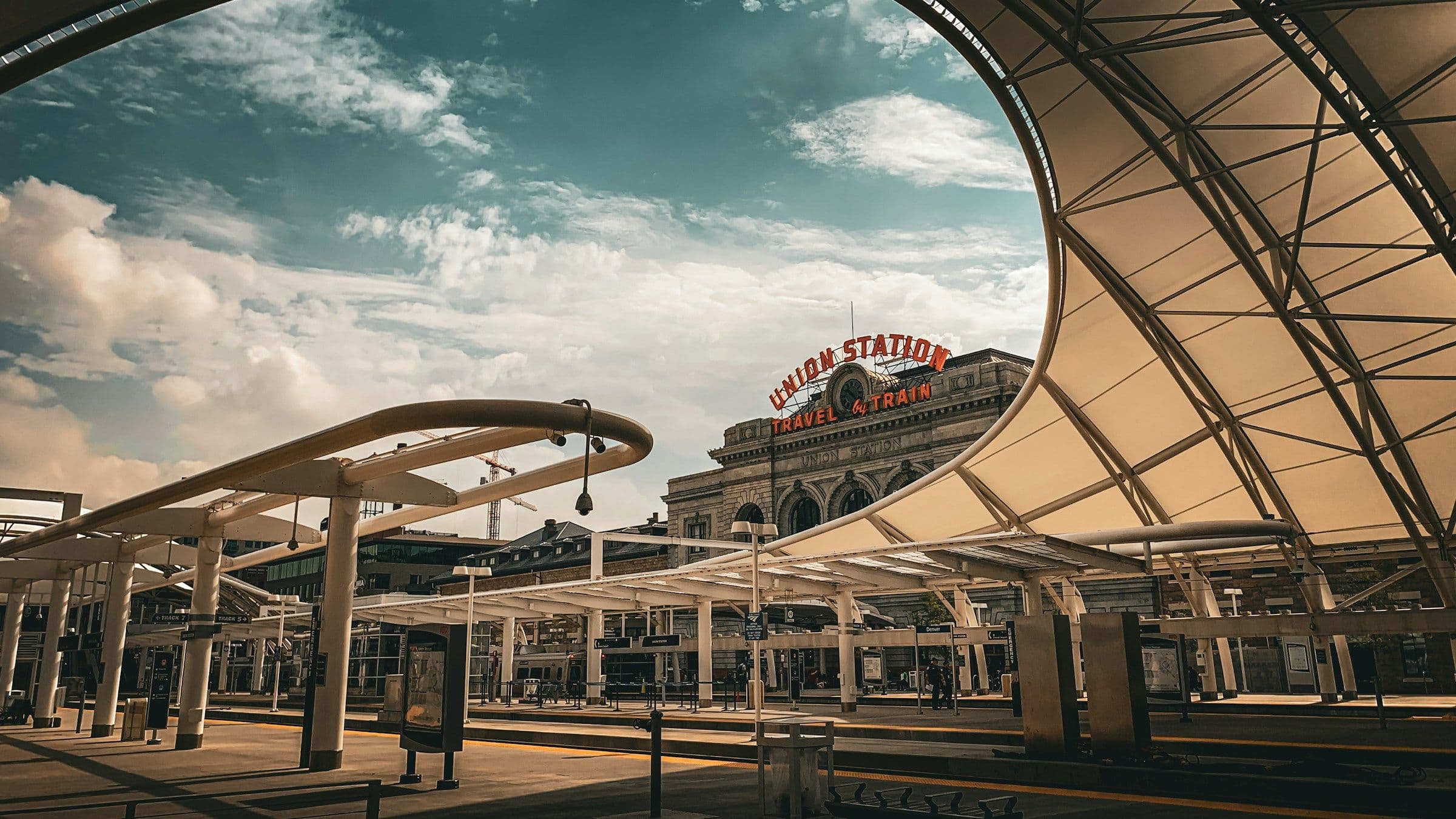
Union Station and Lower Downtown, usually called LoDo, are the strongest default for first-time visitors arriving on the A Line. The airport rail trip ends at Union Station, and the surrounding area puts restaurants, sports venues, downtown walks, and onward transit within reach.
This area works especially well for a family with manageable luggage, a group attending downtown meetings, or travelers who want to avoid a transfer immediately after the airport train. It also makes the final airport day easier because the group already knows the route back to the station.
The tradeoff is that a “near Union Station” label can cover different blocks. Check the actual entrance-to-platform walk, street crossings, hotel check-in time, and late-night route rather than trusting a broad neighborhood name. If several travelers land separately, make the station or hotel lobby the planned reunion point.
2. Downtown and the convention-center corridor: best for central schedules
Downtown is a practical base when the trip revolves around the Colorado Convention Center, Denver Performing Arts Complex, central business meetings, or attractions along the 16th Street corridor. Visit Denver's car-free transportation guide describes the 16th Street FreeRide and connections among Union Station, Civic Center, LoDo, the convention center, and nearby destinations.
This area can reduce daily travel even if it adds a short connection after the A Line. It is often a better choice than Union Station when the group needs to reach the same convention or performance venue every day.
Map current FreeRide routing and RTD service before the trip because downtown operations, construction, and detours can change. Also compare hotel loading access and any luggage-storage plan for the arrival or departure day. A central hotel is only convenient if the group can reach the entrance comfortably.
3. Golden Triangle and Capitol Hill: best for museums and civic attractions
Golden Triangle and Capitol Hill fit travelers who plan to spend time around the Denver Art Museum, History Colorado Center, Civic Center Park, the Colorado State Capitol, smaller galleries, and nearby restaurants. Visit Denver's Capitol Hill and Golden Triangle guide describes the district as an arts-and-history area that is useful to explore on foot.
The main tradeoff is airport arrival. The A Line does not end in this neighborhood, so the group needs a planned connection from Union Station. That connection may be easy for two adults with carry-ons and harder for a multigenerational group with checked bags, a stroller, or mobility equipment.
Choose this area when the local itinerary is strong enough to justify the arrival transfer. Before booking, map the exact hotel to Union Station, the museum cluster, an evening meal, and the return path after dark.
4. RiNo near an A Line connection: best for art, food, and a neighborhood feel
The River North Art District, or RiNo, can work for travelers who want street art, galleries, restaurants, music venues, and a less conventional downtown base. Visit Denver's official RiNo guide notes that some lodging is within reach of the A Line.
RiNo needs the most block-by-block review of these four choices. A hotel close to a useful station or bus connection can support a car-free stay; another property carrying the same neighborhood label may create long walks or repeated rides.
Map the hotel to the nearest useful transit entrance, not to the center of a neighborhood map. Families should also check the walking environment, evening return plan, and distance to the attractions that matter most. A lively district is not automatically the simplest logistics base.
When a car-free Denver plan stops working
The hotel area cannot solve an itinerary that repeatedly leaves the transit-friendly core. A rental deserves serious consideration when:
- the group plans Red Rocks, Golden, foothill stops, or mountain destinations on the same day;
- several relatives, campuses, sports fields, or suburban venues are spread across the metro area;
- travelers have coolers, ski bags, sports equipment, mobility devices, or more luggage than they can comfortably transfer;
- children need car seats and the group wants one installed transportation setup;
- the schedule starts or ends outside practical transit hours;
- the group would otherwise split across several vehicles for multiple days.
A vehicle is not automatically the answer. It adds a pickup, driver requirements, fuel or charging, parking, possible toll-program terms, and a return deadline. Compare the complete day, not only the rental rate.
Build a hybrid stay with one planned vehicle day
For many groups, the cleanest plan is airport rail plus car-free city days, followed by one scheduled rental day. Reserve the hotel first, group the regional stops into one realistic route, and then compare airport and city pickup locations for the exact date.
Travelers can review Denver car and van rental options when a city pickup fits the middle of the stay. If the trip needs a vehicle immediately after landing or through departure, compare DEN airport car and van rentals and include the airport pickup and return process in the schedule.
A practical Red Rocks and Golden vehicle day
Red Rocks and Golden illustrate why one vehicle day can be useful. The group can leave the downtown hotel together, visit Red Rocks Park during verified public-access hours, continue to Golden, and return without rebuilding the plan around several separate transfers.
Before the day, read Red Rocks Park & Amphitheatre's official access and parking guidance. Event days can change access, closure times, parking direction, and pickup procedures, so a daytime park visit and a ticketed concert require different plans.
Visit Golden's getting-here-and-around guide explains current transit, shuttle, walking, and parking options. Even with a rental, check live parking signs and destination conditions rather than depending on saved prices or an old map.
Keep the day modest. Red Rocks plus central Golden can be a coherent Front Range outing; stacking a distant mountain destination onto the same day can turn a useful rental into a rushed drive.
Match the rental vehicle to the group, not the destination image
The right vehicle is the smallest option that safely fits the travelers, bags, accessibility needs, and planned roads. An outdoor destination does not automatically require the largest vehicle or a specific drivetrain.
A midsize SUV rental may fit a smaller family or two couples with moderate bags. Check the actual cargo layout before assuming the rear area will hold luggage and day-trip gear.
A minivan rental often balances family access, flexible seating, and luggage space. When every seat is used, the group still needs to confirm room behind the last row.
A 12-passenger van rental can keep an extended family, school group, team, or church group together. Confirm driver eligibility, parking access, cargo, and comfort with a larger vehicle.
A 15-passenger van rental is most relevant for the largest groups, but it requires the most careful plan for bags, curb loading, garage clearance, driver confidence, and destination access.
Two smaller vehicles can be easier to park and allow separate schedules. One passenger van can reduce coordination. Price both setups and count qualified drivers before deciding.
Use this hotel-and-transportation booking order
The hotel and the transportation plan should be chosen together:
- Mark every must-do destination on one map.
- Choose the area that reduces the most repeated trips.
- Map the full DEN-to-hotel path with luggage.
- Test the evening return from the farthest city stop.
- Put every regional stop on one or two candidate vehicle days.
- Count travelers, bags, car seats, mobility devices, and gear.
- Compare transit, rideshare, airport rental, city rental, and split-rental logistics.
- Verify hotel loading, parking, rental-counter hours, transit alerts, and destination access before final payment.
For most rail-first groups, Union Station and LoDo remain the simplest answer to where to stay in Denver without a car. Downtown, Golden Triangle, and RiNo can be better when their attractions match the itinerary. Choose the hotel block first, then rent only for the day the group truly needs the extra reach.
Our Most Popular Vehicles




Frequently Asked Questions
Union Station and LoDo are usually the easiest choices because the A Line arrives at Union Station and the surrounding downtown area supports walking and transit. Downtown near the 16th Street corridor can be better for conventions or performances. Always map the exact hotel entrance and final transfer before booking.
Yes, especially when the hotel is near Union Station or a useful downtown connection and most activities remain central. Families should test the airport path with luggage, stroller or mobility needs, evening returns, and every planned attraction. One regional day may still justify a short rental.
LoDo is usually simpler for an A Line arrival because Union Station is in the neighborhood. Downtown near the convention-center and 16th Street corridor can reduce daily travel when meetings, shows, or central attractions dominate the schedule. The better choice is the area that eliminates the group's most repeated trip.
RiNo can work when the chosen hotel is close to an A Line station or useful bus connection and the group's main plans are in the district or downtown. Because walking and transit convenience varies by block, map the actual property, station entrance, evening route, and luggage path before reserving.
A one-day rental can make sense when the rest of the stay is downtown but one day includes Red Rocks, Golden, several suburbs, or equipment that is difficult to transfer. Compare city and airport pickup hours, total fees, parking, driver needs, and the return plan before assuming a split rental is cheaper.
A midsize SUV may suit a smaller party with moderate luggage, while a minivan often balances family access and flexible seating. Twelve- or 15-passenger vans can keep larger groups together. Confirm the actual cargo layout, driver eligibility, parking access, and destination rules before choosing any class.
Not always; private shuttles, rideshare, carpooling, or other current transportation options may fit some visits. A rental can be useful when a group wants to pair Red Rocks with Golden or other stops on its own schedule. Check the official Red Rocks page because event-day access and pickup procedures can change.