World Cup 2026 West Coast Road Trip: Seattle, San Francisco & LA Match Week
TL;DR: Follow the roar of the crowds down the U.S. West Coast during World Cup 2026. This two-week road trip connects three host cities Seattle, the San Francisco Bay Area, and Los Angeles aligning with match days and fan festivities. Enjoy stadium adrenaline on game nights and scenic American roadways in between. From Seattle’s downtown stadium vibe to California’s coastal drive and LA’s grand finale, these itinerary blends soccer excitement with an unforgettable summer road adventure.
Trip at a Glance Seattle → San Francisco → Los Angeles
- Duration: ~14 days (June–July 2026)
- Host Cities: Seattle → San Francisco Bay Area → Los Angeles
- Approximate Miles: ~1,300 miles (Seattle to LA)
- Best Start / End Airports:
- Ideal Vehicle: One-way rental SUV or minivan extra room for luggage, gear, and multi-city travel
Why This Route Works for World Cup 2026
This West Coast route is timed with the World Cup group stage and early knockouts, allowing fans to catch games in three different cities without rushing. For example, Seattle hosts a marquee USA group match on June 19. A few days later, the Bay Area hosts another group game on June 25, and by early July Los Angeles features a Round of 32 knockout and even a quarterfinal. The spacing of these matches gives you enough buffer to drive instead of fly a unique chance to turn a World Cup trip into a coastal road adventure. Distances between these host cities are very drivable (Seattle to SF ~808 miles; SF to LA ~380–460 miles depending on route), and the journey links some of the USA’s most iconic sights. Fan appeal is huge: Seattle is famed for its passionate soccer support, the Bay Area offers diverse culture and a brand-new World Cup venue, and LA provides the glamour of a world sports capital. By driving, you’ll experience everything from the Cascades to Pacific beaches en route, celebrating the World Cup with fellow fans at stadiums and fan fests along the way.
Seattle Arrival, Match Day & Rest Day Highlights
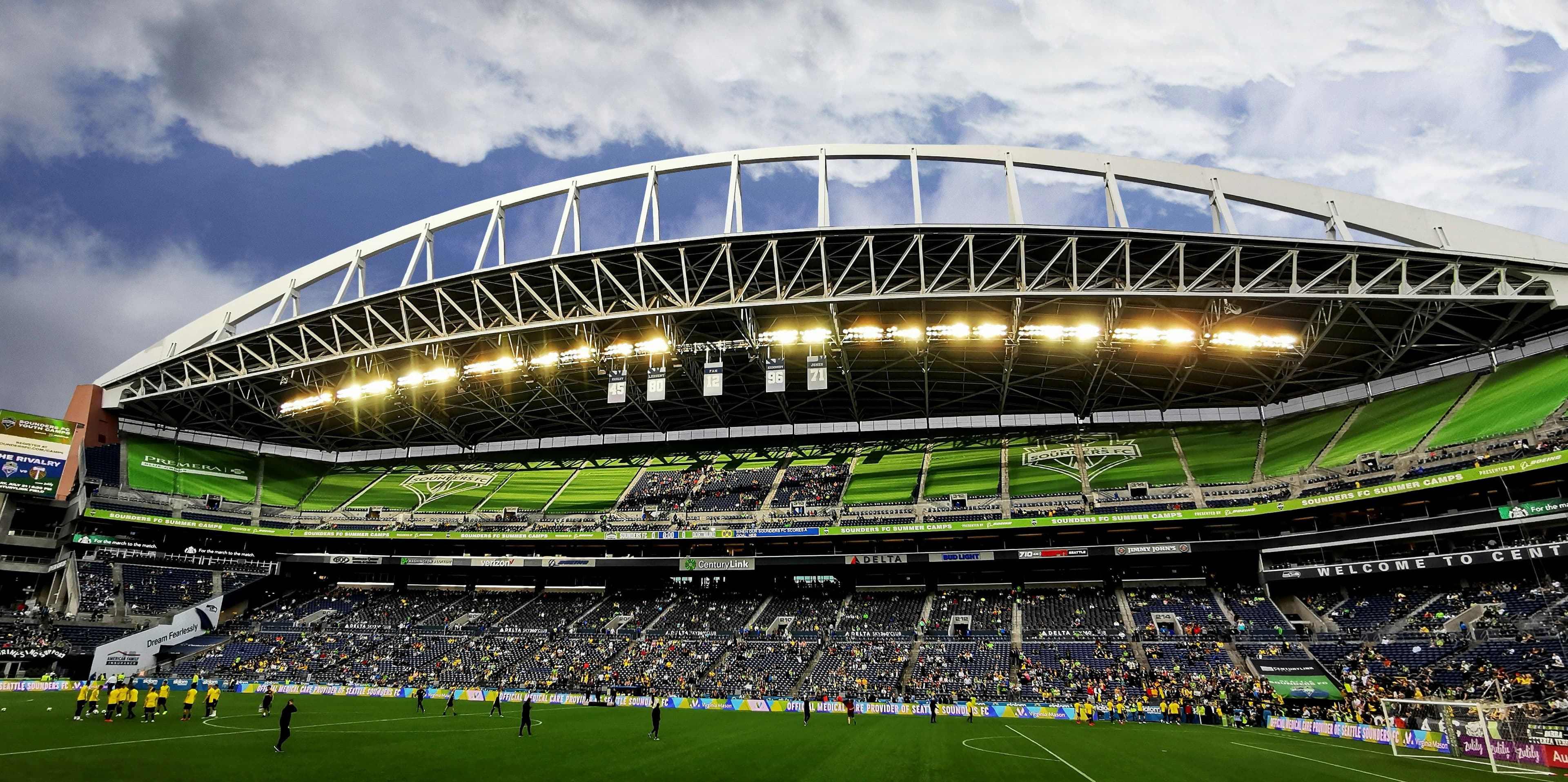
Seattle’s Lumen Field sits in the heart of downtown, making it easy for fans to reach by foot and transit. Known for deafening crowds, the stadium has even registered seismic activity from fan noise during big moments.
Arrival Day: Fly into Seattle a day or two before the match. Seattle-Tacoma International Airport (SEA) is the region’s hub from there, it’s an easy Link light rail ride to downtown, where Lumen Field is located. Check into a hotel near downtown or the historic Pioneer Square district (you’ll be walking distance from the stadium). Use your arrival day to explore: wander Pike Place Market’s food stalls, take in panoramic city views from the Space Needle at Seattle Center, or stroll the waterfront. In June, Seattle’s weather is mild (around 71–76 °F daytime) with late sunsets perfect for a pre-game evening by Elliott Bay. And don’t worry too much about rain; June rainfall is relatively light, though a drizzle is possible, so pack a light jacket just in case.
Game Day (Seattle): This itinerary lines up with Match 32 on June 19, 2026 a group stage clash featuring the United States at Lumen Field. On match day, soak up the buzz downtown: grab breakfast at a local café, then join other fans at a pub or the official Seattle Fan Celebration zone. (Seattle is planning a major Fan Fest at Seattle Center, beneath the Space Needle, with giant screens, music, and food trucks a great spot for pre-game energy if your match is in the evening.) Getting to the stadium is a breeze: Seattle is one of few host cities with a downtown stadium, so fans can walk or use public transit instead of driving. If you’re near downtown, it’s a 15–20 minute walk to Lumen Field. Otherwise, take the Link light rail to Stadium Station or the King County Metro bus both drop you within a few blocks of the gates. Aim to arrive at least 90 minutes before kickoff; security lines will be long (gates typically open 2 hours prior for FIFA events). Lumen Field enforces a clear bag policy and thorough screening, so pack light and allow time for entry.
Once inside, get ready for an electric atmosphere. Seattle’s crowd is among the loudest in the world the roar of Sounders and Seahawks fans at Lumen Field has literally caused mini earthquakes (“Beast Quake,” anyone?). For a World Cup match, expect flag-waving supporters’ sections and chants echoing under the stadium’s roof. Grab some locally brewed coffee or craft beer at the concessions (Seattle loves its beer almost as much as its coffee), and enjoy the pageantry of the World Cup. Post-game, linger a bit to let traffic die down and revel in the celebration. Victory or loss, fans will flood into the streets. You can walk north into Pioneer Square many bars here will be open late for post-match revelry, and you might catch impromptu street parties especially if the USMNT won. The city will feel alive with a global influx of fans, so soak in the atmosphere (all within a relatively compact, walkable area around the stadium).
Rest Day in Seattle: After the excitement, give yourself a day to relax and tour the Emerald City. Sleep in, then perhaps take a ferry ride to Bainbridge Island for gorgeous skyline views the ferry terminal is steps from downtown and it’s a classic Seattle experience. Sports fans can visit the Sounders team store or even do a stadium tour if offered (Lumen Field sometimes has tours, though check ahead if they pause during the World Cup). If you’re craving nature, consider a short hike: Discovery Park offers trails with Olympic Mountain views, or take a day trip to Mount Rainier National Park (you’ll need a rental car or tour for that but seeing the snow-capped volcano up close is unforgettable if time allows). More urban options: explore neighborhoods like Capitol Hill (coffee shops, record stores, and nightlife) or Fremont for its quirky art (hello, Fremont Troll). The key is to recharge you have a long drive ahead and more matches to come. By the end of your Seattle stay, you’ll have experienced world-class soccer and Pacific Northwest hospitality, all under summer skies that stay light until nearly 10 pm.
Drive to City 2: Seattle to San Francisco Bay Area
Leaving Seattle, it’s time to hit the road for California. You have two main route options:
- Fastest (I-5 South): The direct route is via Interstate 5, which spans the length of the West Coast’s interior. It’s about 800 miles from Seattle to San Francisco, roughly a 12- to 13-hour drive without major stops. Realistically, you’ll split this into two days. A popular halfway stop is around southern Oregon or far northern California. For example, you could drive ~5–6 hours to Medford, OR or Ashland, OR on Day 1 (approx. 350 miles). This segment takes you past Portland (consider a lunch stop in the Rose City) and through the green valleys of Oregon. Near Medford, you’re close to Crater Lake National Park if you’re ambitious though a detour to see America’s deepest blue lake will add several hours. Otherwise, enjoy an evening in a small Oregon town; Ashland has a charming downtown and Shakespeare Festival, while Medford offers low-key dining and plenty of lodging. On Day 2, continue south on I-5 into California. You’ll witness the conical peak of Mt. Shasta (14,179 ft) dominating the horizon in northern California a great spot to stretch your legs is the Mt. Shasta City lookout or Lake Siskiyou for photos. As you descend into the Central Valley, you’ll pass miles of orchards. You might overnight again around Redding, CA or push through all the way to the Bay Area depending on your timing. I-5 is efficient, but be prepared for long stretches of farmland and fewer tourist stops. One upside: speed limits are 70 mph in many sections, and towns are spaced far apart, so you can cover ground quickly.
- Scenic (US-101 & Pacific Coast): If you have extra time (and a love for coastal scenery), consider the more scenic coastal route for part or all of the journey. One option is to head west from Seattle toward the Olympic Peninsula and then drive US-101 down the Washington and Oregon coast, eventually connecting to US-101 in California. This Pacific Coast Highway approach is much longer about 1,100 miles total Seattle to SF (taking ~25 driving hours) if you hug the whole coast but you can selectively include the best sections. A popular compromise: drive I-5 from Seattle to Portland (2.5–3 hours), then cut over to the Oregon Coast (for example, via US-26 to Cannon Beach, OR). From there, take the famed US-101 south along the Oregon coastline, known for its dramatic sea stacks, lighthouses, and sand dunes. Highlights include Cannon Beach’s Haystack Rock, the charming town of Newport (stop at Mo’s for chowder and watch sea lions in the bay), and the sprawling Oregon Dunes National Recreation Area near Florence. Oregon’s coast has ample pull-offs for scenic vistas take advantage of them! Plan for lower speeds; the coastal highway is curvy and passes through many small towns (worth it for the views). You’ll want to break this route into at least two overnights. For instance, night one in Lincoln City or Newport (northern/central Oregon coast), night two around Eureka, CA or Crescent City, CA after you’ve traversed southern Oregon and crossed into California. In far Northern California, US-101 winds through the Redwood National and State Parks don’t miss a quick stroll among these ancient giants (the Lady Bird Johnson Grove or the drive-through Chandelier Tree are fun pit stops). The last leg takes you through wine country north of San Francisco (Sonoma County) before reaching the Bay. Note that this coastal route can add a couple of days and you’ll arrive in the Bay Area later, so only choose it if your schedule allows. The payoff is huge: by the time you reach San Francisco, you’ll have seen some of the Pacific Coast’s most stunning landscapes all while avoiding the more monotonous stretches of I-5.
Roadside Attractions & Tips: No matter which route, keep an eye out for interesting stops. Along I-5, a quirky detour is the “Trees of Mystery” kitschy roadside attraction in Klamath, CA (if you veer off I-5 to 101 in northern California) featuring a giant Paul Bunyan statue fun for a selfie. There’s also Mount St. Helens off I-5 in Washington (if you depart Seattle early, a 1–2 hour side trip to the volcano observatory is possible to see the volcano that blew its top in 1980). On the coastal route, nearly every hour brings something notable: Thor’s Well (a unique tidal sinkhole) near Cape Perpetua in Oregon, the charming Tillamook Creamery (ice cream and cheese factory tour) in Tillamook, OR, or Avenue of the Giants (a scenic alternate of 101 through redwood groves in Humboldt County, CA). If you’re a wine lover, consider a stop in Ashland/Medford (southern Oregon has a budding wine scene) or Hopland, CA on 101 for tasting local wines. Be mindful of traffic: I-5 is generally smooth but can clog near cities (Portland, Sacramento). US-101 and coastal roads will be slower going, especially with summer RV traffic but the beauty more than compensates. Fuel up when you can in rural stretches; distances between gas stations, especially on the coast or in the mountains, can be large. Finally, enjoy the ride this is a classic American road trip in the making!
San Francisco Bay Area Arrival, Match Day & Off-Day Ideas
Arriving in the Bay Area, you’ll transition from tranquil nature back into World Cup frenzy. San Francisco and Santa Clara (where the stadium is) are about 45–50 miles apart, but the region is well-connected by highways and transit.
Arrival in Bay Area: Depending on your route and pace, aim to arrive at least a day before your Bay Area match. If coming via I-5, you’ll likely approach from the north via I-80 or US-101. If coastal, you might cross the Golden Gate Bridge from the north a grand entrance with postcard views of the San Francisco skyline and bay (have your passenger snap photos!). Settle in at your chosen base. You have options here:
- Stay in San Francisco if you want the classic city experience (hotels near downtown or Fisherman’s Wharf offer tourist attractions but note it’s a 1–1.5 hour trip to the stadium on game day).
- Stay in the Peninsula/South Bay (e.g. Palo Alto, Mountain View, or San Jose) if being closer to Levi’s Stadium is a priority. For example, Palo Alto is about 20 miles north of Santa Clara and has great restaurants plus a Caltrain station, while San Jose is a major city just south of Santa Clara. Santa Clara itself has some hotels near the stadium and a theme park (California’s Great America), but note that outside of event times the area is quieter suburban sprawl.
Bay Area weather in late June is a tale of two climates: San Francisco will be cool and possibly foggy (think highs ~66 °F, evenings in the 50s, and a decent chance of morning fog), whereas Santa Clara (inland) is much warmer and sunnier (highs upper 70s–80s °F and dry). Pack layers you might wear a light jacket in SF and then be in short sleeves under Santa Clara’s sun the next day.
Use your non-match time to enjoy the Bay Area’s delights. In SF, ride a historic cable car up Nob Hill, visit the sea lions at Pier 39, or take a ferry to Alcatraz Island to tour the infamous prison (book Alcatraz tickets well in advance). If you’re a museum buff, Golden Gate Park houses the de Young Museum and California Academy of Sciences. Alternatively, a simple walk through Chinatown or the Mission District (for street art and burritos) will give you a taste of SF’s vibrant culture. If you based yourself in the South Bay, consider checking out downtown San Jose’s Santana Row (an outdoor shopping/dining area) or the Tech Interactive museum.
Game Day (Bay Area): The Bay Area’s World Cup games are at Levi’s Stadium in Santa Clara, a modern open-air stadium with 68,500 seats (expandable beyond 70k for FIFA). Let’s assume you’re attending Match 60 on June 25, 2026 another group stage fixture (not involving the USMNT, but still a high-profile game). If you’re in San Francisco, plan your journey to Santa Clara carefully. Driving can take 1–1.5 hours, especially if it’s a weekday with traffic. A great alternative is public transit: many fans will take Caltrain or BART down from the city. For example, you can catch Caltrain from San Francisco to Mountain View, then transfer to VTA light rail which stops right at Great America Station next to Levi’s Stadium. On match days, expect special event trains and shuttles to handle the crowds. This way you avoid parking woes and can even enjoy a beer on the train with fellow fans (Caltrain often allows alcohol in moderation). If you do drive, pre-book your parking through official channels Levi’s Stadium requires advance parking permits and lots can sell out. Arrive early (at least 2–3 hours before kickoff) to navigate highway traffic (Highways 101, 237, and 880 funnel into the stadium area and will be congested). Many fans make a day of it by tailgating in the parking lot, a tradition carried over from 49ers NFL games expect BBQ grills, soccer flags, and camaraderie. Note that tailgate space may be limited by FIFA rules, but you’ll still see fan groups gathering around their cars.
Before heading in, check out any fan zones around the stadium. Levi’s Stadium has a sizable plaza and often hosts sponsor booths or entertainment on big event days. Santa Clara’s climate will likely be hot and sunny at match time (bring sunscreen and a hat!). Once inside, you’ll find a good variety of concessions (everything from garlic fries a Bay Area staple to Mexican fare). The stadium sightlines are excellent, and the field will be natural grass installed just for the World Cup. If this match is an evening kickoff, you’ll get to see a lovely sunset over the Silicon Valley hills from the stands.
After the final whistle, plan a patient exit strategy. Post-game traffic at Levi’s can be notoriously slow tens of thousands of cars trying to leave at once. If you took transit, trains will be packed but at least you won’t be inching along in a car. Consider hanging out an extra hour near the stadium perhaps at a nearby restaurant or even in your parking spot until the rush thins out. Another idea: walk over to CalTrain’s Lawrence Station (~30 minutes from the stadium) instead of waiting for the closer shuttle, to catch an emptier train further up the line. Local authorities usually run extra late-night trains on match days, so you’ll get back to SF or San Jose eventually. Safety-wise, the area around the stadium is very orderly, though not particularly pedestrian-friendly beyond the immediate blocks, so stick to marked paths and follow the crowd.
Off-Day in the Bay: Use your free day to experience more of what the Bay Area offers. If you stayed up north in SF, perhaps dedicate a day to Wine Country Napa and Sonoma valleys are about an hour’s drive from the city (or you can book guided wine tours). A relaxing day among vineyards could be a nice change of pace from the noise of matches. Alternatively, drive down the Pacific Coast a bit: an hour south of SF you’ll find Half Moon Bay (coastal bluffs and beaches) or even Santa Cruz (classic beach boardwalk amusement park, surfing spots) about 1.5 hours from SF. For those based in the South Bay, you could explore the innovative side of Silicon Valley take a peek at the Googleplex (Mountain View) or Apple Park Visitor Center in Cupertino for some tech tourism. History buffs might enjoy the Winchester Mystery House in San Jose, an odd Victorian mansion with a labyrinth of rooms. And if you didn’t earlier, make some time for San Francisco itself: the city’s Fan Fest is expected at Civic Center Plaza downtown, which is a fun way to watch other World Cup matches on giant screens with an international crowd. Grab some clam chowder in a sourdough bowl at Fisherman’s Wharf, watch the fog roll under the Golden Gate, and prepare for the final leg of your journey. Next stop: Los Angeles!
Drive to City 3: Bay Area to Los Angeles (Pacific Coast Highway)
The last major drive of your road trip is a California classic. You’ll be heading roughly 380–400 miles south to Los Angeles. You have options for a straight shot or a scenic coastal cruise:
- Quickest Route (I-5 or US-101): The fastest way from the Bay Area to LA is about 380 miles, taking around 6 hours of driving via I-5. This inland route takes you through the flat Central Valley efficient but relatively uneventful (lots of farmland and a few large travel plazas; Harris Ranch is a famous steakhouse stop along I-5 if you need a meal). Alternatively, some prefer Highway 101 from San Jose through the Salinas Valley, which is a bit longer but more scenic, then connecting to I-5 later. Either way, if you’re in a hurry (say you need to be in LA by the next day for a match), you can leave early and do the drive in one long day. Keep in mind LA traffic arriving in the Los Angeles area during late afternoon or evening can add significant time. Hitting the northern LA suburbs by 3 pm versus 6 pm can be the difference between breezing in or crawling on the freeway.
- Scenic Route (Hwy 1 Pacific Coast Highway): Given this might be a once-in-a-lifetime trip, many fans will opt for the Pacific Coast Highway (PCH) approach between the Bay and LA. This means driving California’s Highway 1 where possible, famously known as the PCH, which hugs the coastline. From San Francisco, you can start on Highway 1 through Pacifica and Half Moon Bay. One strategy is to break this spectacular drive into two days so you can actually enjoy the sights. Day 1: Go from the Bay Area to somewhere around Cambria, CA or San Luis Obispo (SLO) that’s roughly the halfway point (~240 miles via the coast). This stretch includes the crown jewel: Big Sur. You’ll drive over high bridges (like Big Creek Bridge and Bixby Bridge) spanning rugged cliff sides above the Pacific. The road twists past waterfalls (pull over at McWay Falls overlook), redwood groves, and panoramic coastal vistas it’s pure driving bliss. There are no towns of size in Big Sur, just lodges and campsites, so plan lunch at places like Nepenthe (famous cliffside restaurant) and fuel up in Carmel or Monterey beforehand. By the time you reach Cambria or SLO in the evening, you’ll have seen California’s wild coastline up close. Day 2: Continue from Cambria/SLO to Los Angeles (~240 more miles). This portion features Morro Bay (with its iconic Morro Rock), the option to tour Hearst Castle in San Simeon in the morning (if you stayed near there tours start early; it’s a slight backtrack from Cambria), and the surfer vibes of Pismo Beach. South of SLO, Highway 1/101 runs inland for a bit; you can choose to stay on the slower coastal byways through places like Santa Ynez wine country or rejoin 101 for faster travel. By afternoon, you’ll hit Santa Barbara, known as the American Riviera for its palm-lined beaches and Spanish architecture a great lunch or coffee stop. From Santa Barbara into LA (via Highway 101 which becomes the Ventura Freeway), you’ll pass through Malibu’s coastline. Consider timing a sunset at a Malibu beach if it fits the oranges and pinks over the Pacific are unforgettable. As you enter the Los Angeles metro, you might encounter heavy traffic depending on the time; Highway 1 turns into city streets in Santa Monica, so most likely you’ll switch to the 10 or 405 freeway to reach your specific LA lodging. Overall, the PCH route from SF to LA is about 460 miles and 9–10 hours of pure drive time, not counting stops hence the overnight suggestion. It’s absolutely worth it if you have the time, as it’s considered one of the most beautiful drives in the world.
Overnight Stop Suggestion: If doing the coastal route, Cambria or San Luis Obispo make good midway stops. Cambria is a quaint seaside village right by Hearst Castle, with cozy inns and wine tasting rooms perfect if you want a quiet night. San Luis Obispo is a small city with a lively college-town feel (Cal Poly is there), offering more restaurant choices and a fun downtown farmers’ market (Thursday nights). Either gives you a springboard to explore nearby attractions: Hearst Castle and the elephant seal colony at Piedras Blancas if in Cambria, or the SLO Wine Country and Madonna Inn (an kitschy famous hotel) if in SLO. Alternatively, Monterey/Carmel could be a stop if you leave SF late in the day then day two would be Monterey to somewhere like Ventura or Santa Barbara. Customize based on your interests and schedule.
Roadside Highlights (SF–LA): In Big Sur, every turnout is Instagram-worthy, but don’t miss Julia Pfeiffer Burns State Park (for McWay Falls) and Pfeiffer Beach (if you can navigate a narrow road to a hidden purple sand beach with rock arches). Keep an eye out for wildlife: sea otters bob in the kelp forests off Big Sur, and elephant seals lounge on the beaches near San Simeon. As you drive through Central Coast towns, consider a detour to Solvang, a Danish-inspired village inland near Santa Barbara it’s like a European hamlet transplanted to California, known for aebleskiver pastries and windmills. If you love history, the California Missions trail intersects your path the Mission in Santa Barbara (“Queen of the Missions”) is a beautiful site from the 1780s. And once in LA County, Highway 1 through Malibu offers glimpses of celebrity beach homes and legendary surf breaks like Zuma Beach. In short, this drive is not just transit it’s a highlight of the trip. Just remember: flexibility is key. Landslides occasionally close parts of Highway 1 in Big Sur (check conditions before you go), in which case you’d detour to US-101. Summer coastal fog can obscure some views in the mornings, but it usually burns off by midday. Take your time, and you’ll roll into Los Angeles with a camera full of panoramas and a real sense of California’s breadth.
Los Angeles Final Match Day & Big City Finish
Welcome to Los Angeles, the grand stage of World Cup 2026! LA is hosting eight matches, including the tournament’s opening game and a quarterfinal. By the time you arrive, the city will have been in World Cup mode for weeks, and you’ll immediately feel the buzz.
Settle into your LA accommodation. Given LA’s sprawl, choose lodging strategically ideally on the west side or near Inglewood if you can, because that’s where SoFi Stadium (the World Cup venue, referred to by FIFA as “Los Angeles Stadium”) is located. Popular areas for visitors include Downtown LA (lots of hotels, about 12 miles from SoFi), Culver City (trendy and somewhat central, ~8 miles from SoFi), or Beach areas like Santa Monica/Venice (farther ~15 miles but a great LA experience). Just account for LA traffic when planning game day logistics.
Los Angeles in early July will be warm and sunny average highs around 80–83 °F (27–28 °C) with almost no rain. It’s essentially perfect summer weather, though can be hot in the daytime sun. Evenings are comfortable, occasionally cool near the ocean, but generally milder than northern California. As always, sunscreen and hydration are crucial, especially if you’ll be outdoors at fan events.
Final Game Day (Los Angeles): The itinerary culminates with a match at SoFi Stadium. Let’s say you’re catching Round of 32 Match 12 on July 2, 2026 a knockout match featuring (for instance) the winner of Group H vs. runner-up of Group J. This is a huge deal: win or go home. SoFi Stadium is a marvel of modern design a massive, partially enclosed arena that hosted the last Super Bowl and will host the World Cup opener and a quarterfinal. With a capacity over 70,000 and a sweeping oval roof, it’s as much a spectacle as the games themselves.
On match day, plan your transportation wisely. SoFi is in Inglewood, just a few miles east of LAX airport. Unlike Seattle, you can’t just walk from downtown; unlike Levi’s, there’s no on-site rail station yet. LA’s Metro rail system is expanding, but currently the closest you can get is the Metro C Line (Green) to Hawthorne/Lennox Station, about 3 miles from the stadium. From there, Metro is organizing shuttle buses to SoFi on game days. Another option is Metro’s new K Line which has a stop in downtown Inglewood ~1.5 miles from SoFi; there will likely be shuttle or rideshare options from that station as well. The tournament organizers will publish detailed transit plans keep an eye on the LA host committee site. If you drive, absolutely pre-book parking SoFi’s parking passes will be sold online via FIFA’s site or ParkWhiz. Parking isn’t cheap (expect $50–$80) and the lots around the stadium fill up quickly. Arrive several hours early if driving, to navigate Inglewood’s traffic restrictions (certain streets close on big events) and to claim your spot. Rideshare (Uber/Lyft) is another popular choice there are designated drop-off zones near the stadium (e.g. on Kareem Court), but surge pricing will be in effect and post-game rides may be scarce with so many people.
Aim to get to the vicinity early and maybe enjoy the Hollywood Park entertainment complex adjacent to the stadium there are shops, a lake, and open areas where pre-game festivities might occur. LA will also have a massive Fan Fest at Exposition Park (by USC, a few miles away) running all tournament long. You could spend the first part of your day there, watching other matches on big screens and enjoying food trucks and live music with fans from everywhere. Then head to SoFi by mid-afternoon for your match.
Inside SoFi Stadium, prepare to be wowed by the giant oval video screen (the “Infinity Screen”) hanging above the field. The venue is cutting-edge, but note: it’s not fully enclosed on the sides, so it’s open-air with a roof you’ll get a nice breeze and natural light. Concessions will offer everything from street tacos to classic hot dogs (though at LA prices, which are steep). Given LA’s diverse population, expect a vibrant mix of fans you might see expat communities turning out in force for whichever teams are playing. The Fan Fest vibe might even continue inside with likely entertainment, perhaps a celebrity national anthem (it’s LA, anything’s possible). As a spectator, soak in the fact that you’ve road-tripped your way here through three host cities! This is the moment to savor.
When the match ends (perhaps with extra time or penalties if it’s a knockout drama!), plan a calm exit. Roughly 70,000 people will depart together, so there will be waits. You might hang out in your seat for a while or explore the stadium concourse, or even head back to the adjacent Hollywood Park area for a post-game drink to let traffic die down. LA Live in Downtown or the Santa Monica Pier could be late-night gathering spots if you want to join general World Cup merriment after leaving Inglewood. The official Fan Fest at Expo Park may also be open late with coverage and entertainment. Don’t schedule an early flight out that night; give yourself time to celebrate or commiserate and return to your hotel safely.
Los Angeles Exploration: With the last match of your itinerary done, use any remaining days to enjoy LA’s endless attractions. Whether it’s strolling the Venice Beach boardwalk, hiking up to the Hollywood sign, visiting theme parks (Disneyland is in Anaheim, about 1 hour away; Universal Studios is in Hollywood), or touring film studios, LA has something for every taste. Soccer fans might want to check out an MLS game if schedules align LAFC and LA Galaxy might have matches around that time (LAFC’s stadium is near Expo Park). By night, you can find World Cup watch parties in bars from Koreatown to West Hollywood. And don’t leave without sampling LA’s food scene: tacos from a food truck, In-N-Out Burger, or some of the best international cuisine in the country (Thai Town, Japantown, etc. are all in LA). The weather will likely be sunny and warm every single day, so a beach day is a great call Santa Monica or Manhattan Beach for lively scenes, or Malibu’s Zuma Beach for a more relaxed vibe.
Finally, reflect on what you’ve just done: three cities, three matches, and 1,300+ miles of American road. You witnessed the Stars and Stripes wave in Seattle’s thunderous crowd, celebrated with global fans in the Bay Area, and cheered knockout drama under California stars in Los Angeles. Not only did you get a once-in-a-lifetime World Cup experience, you also saw an incredible slice of the USA along the way from pine forests to surf beaches. This is the magic of a World Cup road trip: the journey becomes as memorable as the destination.
Vehicle & Rental Logistics
For this adventure, a one-way rental car is the way to go. Plan to pick up your vehicle in Seattle and drop it off in Los Angeles. Major rental companies (Hertz, Enterprise, Avis, etc.) have offices in Seattle (including at SEA airport and downtown) and allow one-way rentals to California, though often with a drop-off fee. It’s wise to book well in advance demand will be high around June 2026, and inventory could get tight with many fans traveling. Look for any promotions or waivers on one-way fees; sometimes larger agencies or membership programs waive those, especially between West Coast cities. When booking, verify the mileage is unlimited (most are, for inter-state travel in the US).
Pickup Suggestions: If you’re spending a couple days in Seattle before driving, consider picking up the car on the day you depart Seattle rather than right when you fly in. Seattle has good transit in the city, and parking downtown is pricey so you might not need a car until it’s time to hit the road. You can rent from a downtown location to avoid airport surcharges, then simply hop on I-5 south when you’re ready to go.
Ideal Vehicle Choice: For a trip of this length with multiple people and luggage, prioritize comfort and space. A midsize or full-size SUV is a popular choice ample cargo room, higher seating position (great for enjoying scenic drives), and generally good road trip comfort. Something like a Ford Explorer or Toyota Highlander can easily fit 4 adults plus bags. If you have a larger group of friends (5–7 people), you might consider a minivan (e.g. Chrysler Pacifica or Toyota Sienna) or even a 7-8 passenger full-size SUV. A minivan might not sound glamorous, but it’ll give you lots of space to stretch out, and you can even remove or fold seats if someone wants to rest in the back between cities. Plus, minivans often have better fuel economy than big SUVs. On the other hand, if it’s just 2–3 of you, a standard SUV or even a roomy sedan could suffice and save on gas. Note that California fuel prices tend to be higher than the national average, so a car with decent MPG is welcome on those long legs. Whether van vs. SUV, think about your needs: vans are king for space and typically have sliding doors (easy in city parking lots), while SUVs handle mountain roads nicely and may have all-wheel-drive (useful if you detour into any mountain areas, though in June it’s not a concern). Either can handle the journey it really comes down to group size and comfort preferences.
One-Way Rental Notes: When dropping off in Los Angeles, consider avoiding locations with high drop fees like LAX if possible. Sometimes downtown LA or off-airport branches have slightly lower rates for drop-off. However, LAX’s rental car center is convenient if you’re flying out immediately. Budget time for the return process after several weeks, your car will likely need a good wash and check-in, but rental agencies are used to road-trip returns. Inspect the car for any damage (and take photos) at pickup and drop-off. Given the distances, ensure your rental agreement includes roadside assistance just in case (flats, etc.). It’s also not a bad idea to have a spare tire kit and to know how to use it some remote stretches (like Big Sur coast or parts of I-5) don’t have services for many miles.
Lastly, consider the “van life” option if you’re adventurous: some travelers might rent a small campervan or RV and combine lodging with transport. The West Coast has plenty of campgrounds. But bear in mind, driving a large RV in city traffic or along winding Big Sur roads is not for the faint of heart, and parking at World Cup events could be challenging (Levi’s Stadium, for example, would require special RV parking arrangements). A standard vehicle is simpler for this itinerary.
Travel Tips: Weather, Traffic & Stadium Hacks
- Weather Prep: You’ll experience a range, so pack smart. Seattle can be cool and possibly drizzly have a light rain jacket and layers (evenings in the 50s °F). San Francisco is famously foggy/chilly in June (don’t let the “California” name fool you you’ll need a sweatshirt or jacket most mornings/evenings). Just 45 miles away in Santa Clara, it’ll be hot and sunny, so also pack shorts, t-shirts, and sun protection. Los Angeles is warm to hot (80s °F) and dry think summer attire, but maybe a light hoodie for late-night near the beach. Essentially, dress in layers and be ready to peel off or add on as needed. A small daypack will be useful to carry layers during match days and hikes.
- Traffic Patterns: West Coast traffic is a character in itself. In Seattle, I-5 through downtown can jam during rush hour (7–9am and 4–6pm), so time your departure south to avoid those windows if possible. Portland, if you pass through, also has congestion around rush hour. In the Bay Area, traffic is heavy on weekdays especially on highways 101 and 880 heading toward Santa Clara in late afternoon (game day in Santa Clara, try to head there by early afternoon to beat the worst of it). Conversely, post-game leaving Santa Clara at night you might miss commute traffic but hit bottlenecks from event volume. LA is notorious: assume slow traffic almost anytime, but especially weekdays 7–10am heading into city and 3–7pm heading out (and around beach areas on sunny weekends). Use navigation apps (Google Maps, Waze) they are lifesavers for finding faster routes or HOV lanes. California has carpool (HOV) lanes on many freeways that can save time if you have 2+ people take advantage. Also, LA freeways have specific reputations: I-405 is often clogged on the Westside, I-10 from Santa Monica can be brutal eastbound in afternoons, etc. Plan an extra buffer of time when driving to the airport or a match. One tip: when driving into LA from the north, some travelers opt to swing inland (I-5 “Grapevine”) then approach central LA via I-210 or I-605 to avoid Westside traffic. It’s longer miles but can be faster if coastal routes are jammed.
- Stadium Access Notes: Each stadium has its quirks:
- Lumen Field (Seattle): Best accessed via transit. The Link light rail’s Stadium Station and International District/Chinatown Station are each about a 5–10 minute walk from the stadium. Multiple bus routes also serve the area. There are parking garages nearby, but on NFL/game days they fill and can cost $50+. If you’re driving in, consider parking a bit farther (cheaper) and walking or rideshare for the last mile. The stadium is adjacent to T-Mobile Park (baseball stadium), so the whole area is used to handling crowds. After games, you can walk into downtown or Pioneer Square for food and avoid sitting in car traffic. Security: expect the standard FIFA security (magnetometers, bag checks with FIFA’s size restrictions likely no backpacks, only small bags). Check Seattle’s host city site for any transit promotions sometimes free transit passes are offered for match ticket holders.
- Levi’s Stadium (Santa Clara): As mentioned, public transit is your friend. The VTA light rail has a stop at the stadium’s doorstep (Great America Station), and special VTA, Caltrain, and ACE trains will run on match days. Santa Clara will likely set up dedicated shuttles from regional transit hubs keep an eye out for announcements. If you drive, pre-book parking on Levi’s official site and note which lot you’re assigned (some lots are a 15-minute walk from the stadium). The area around Levi’s is mostly business parks and a theme park not a lot of dining, so tailgate or eat before arriving. One secret: the nearby Santa Clara Convention Center sometimes offers event parking if you’re late to reserve, that could be an option. After the match, consider hanging in your car (if tailgating) for an hour tailgate lots often have a post-game party atmosphere and you’ll avoid sitting in gridlock on Tasman Drive immediately. Patience is key; local police direct traffic but it can still take over an hour to clear out.
- SoFi Stadium (Los Angeles): Expect intense security and some new procedures, given it’s one of the biggest venues. Arrive early to accommodate the entry process. Being a newer stadium, SoFi has airport-style screening and a strict clear bag policy (NFL rules likely in effect: clear bags only, no large purses). One advantage: SoFi has many entrances and is designed to handle big crowds, but you’ll still see lines if you arrive last-minute. As for approach: if you take the Metro shuttle from the C Line, factor in extra time waiting for buses. If using rideshare, know that after the event there will be designated pickup points a short walk from the stadium follow the signage and maybe even walk a few blocks away from the immediate stadium area to increase your odds of getting a car (drivers avoid the most congested zone). The Inglewood Police often set up post-event traffic diversions; listen to staff about which streets are open for walking. On the positive side, SoFi’s neighborhood (Hollywood Park) is being developed as an entertainment district, so you might find a bar or outdoor screening there to bide your time post-game. Also, given LA’s emphasis on showbiz, be ready for potential surprise entertainment who knows, maybe a concert at half-time or celebrity appearances. LA will make it an experience.
- General Fan Tips: Stay hydrated and fed. All three cities have countless late-night eateries (from Seattle’s food trucks to San Francisco’s Chinatown joints, to LA’s 24-hour taco stands). After a long drive or match, grabbing a bite is both practical and part of the fun. Keep some snacks and water in the car too, especially for stretches like I-5 or Big Sur where services can be 40+ miles apart. It’s also wise to have some cash on hand: some parking or smaller vendors (or even toll bridges like the Golden Gate though that is cashless now, it bills by plate) might need it. However, most places, including transit, accept cards or mobile payments (Seattle and LA transit cards, ORCA and TAP, can be loaded via apps; the Bay Area’s Clipper card too).
- Tech & Connectivity: Bring a car charger for your phone. Using GPS and streaming music on long drives can drain battery, and you’ll rely on your phone for navigation, especially through city traffic. Cell coverage is generally solid on I-5 and in cities. On the coastal route, expect some dead zones in Big Sur and parts of Oregon download offline Google Maps just in case.
- Health & Safety: June/July is generally free of weather hazards (no snow worries, and well before any wildfire season peaks). Still, use sunblock even in overcast SF (UV can surprise you). Take breaks when driving drowsy driving is dangerous, so swap drivers or pull into rest areas (I-5 has many). All the host cities are accustomed to tourists; just practice usual city smarts (don’t leave valuables visible in the car, especially in SF which has had car break-in issues use your trunk). During matches, keep your ticket and ID in a secure pocket. Given global tensions can run high during World Cup, expect a visible security presence but as a fan, the atmosphere is typically joyous and family-friendly.
Who This Itinerary Is Best For
This road trip itinerary is best for fans who crave both soccer and adventure. It’s perfect for a group of friends, especially those who want to follow the U.S. national team or multiple big matches across different cities. American fans will love the chance to see their team in Seattle (a USMNT group match on Juneteenth in Seattle is highlighted by organizers) and then possibly the USA again in LA (the USMNT’s third game is slated for LA on June 25). International fans will also find this appealing instead of being stuck in one city the whole tournament, you get to sample three distinct regions of the country. It’s like a mini-tour of the West Coast with World Cup games as the anchor points.
Ideal Trip Length: About 2 weeks is a comfortable pace for this route. You could condense it to ~10 days if you skip some rest days or drive faster, but two weeks (give or take a day or two) lets you appreciate each city and not feel too rushed on the drives. For example, arrive Seattle around June 17, depart Seattle June 20, arrive Bay Area June 22, depart Bay Area June 26 or 27, arrive LA June 28 or 29, and have a few days in LA for the July 2 match and beyond. If you have more time, even better you could add side trips (perhaps a detour to Yosemite after the Bay Area, or down to San Diego after LA’s quarterfinal). The itinerary is inherently flexible. You might decide to linger a extra day in San Francisco to catch a round-of-32 match there on July 1, then do a single long drive to LA on July 2 in time for LA’s match on July 5 (since LA also hosts a Round of 32 on July 5 per schedule). There’s room to adapt based on which tickets you secure.
Fan Types: This trip is for the die-hard enthusiasts those who want to maximize live match experiences and don’t mind long drives in between. It’s also great for groundhopping fans who aim to visit as many venues as possible. You’ll check off Lumen Field, Levi’s Stadium, and SoFi Stadium in one go three top-notch venues (including the newest NFL palace, SoFi). It helps if at least one person in your group enjoys driving or if you can share driving duties. If you’re a family of fans, this can also be a rewarding trip (plenty of non-soccer attractions to keep kids happy, from the Space Needle to Disneyland). Just be ready for the logistics of kids on long drives (“are we there yet?”).
The itinerary might be less ideal for those who prefer staying in one place and taking day trips, or those with very limited time solely for matches. In that case, picking one host city and flying between matches might be more practical. But if you have the time and sense of adventure, the West Coast road trip is an epic way to experience World Cup 2026.
Finally, this route is great for flexible explorers. Because you’re not tied to a fixed schedule beyond match dates, you can adjust on the fly if you hear about a must-see sight or a cool fan event, you can incorporate it. Want to join a local supporters’ pick-up soccer game at a park? Go for it. Found out your team might play a Round of 16 in another nearby city like Vancouver? You could even drive north after Seattle if crazy enough (though crossing the border adds complexity).
In summary, World Cup 2026 West Coast Road Trip is for fans who want the ultimate road supporter to experience a blending of sports passion with the freedom of the open road. It’s a trip where you’ll collect not just match tickets, but stories from the road the coastal sunsets, the truck-stop chats, the city block parties. If that sounds like your kind of World Cup journey, start your engines (and snag those match tickets!). The West Coast is calling three host cities, one unforgettable ride.
Check Out Our Ultimate World Cup 2026 Road Trips Guide – Built for the Ultimate Fan
Turn your World Cup tickets into a once-in-a-lifetime adventure. Chase the tournament across the U.S. with our curated road trip itineraries built around real match dates, host cities, and the best drives in between.
Coast-to-Coast Tournament Road Trip (Follow the Entire World Cup)
Start on the West Coast and finish at the Final in New York/New Jersey, hitting multiple host cities and knockout rounds along the way. Perfect for fans who want the full World Cup 2026 experience in one epic journey. Read the full guide
Texas & Heartland Road Trip: Houston → Dallas → Kansas City
Follow the tournament deep into fútbol-mad Texas and the Midwest. Group matches and knockouts pair with BBQ, music, and classic Americana across Houston, Dallas, and Kansas City.
Read the full guide
Southeast Road Trip: Miami → Atlanta
Beach days, Latin nightlife, and Everglades exploration in Miami then up to Atlanta’s futuristic stadium and Southern hospitality for knockout-round drama. A short, high-impact route.
Read the full guide
Northeast Corridor Road Trip: Boston → NYC/NJ → Philadelphia
Three iconic cities, fast drives or quick Amtrak hops, and a dense cluster of group and knockout games. Experience Boston’s history, New York’s skyline, and Philly’s food scene between matches.
Read the full guide
Knockout Stage Chase: Quarterfinal → Semifinals → Final
The ultimate late-tournament sprint: a fully driveable route that follows a West Coast Quarterfinal, both Semifinals in Dallas and Atlanta, and ends at the World Cup Final in New York/New Jersey.
Read the full guide
Our Most Popular Vehicles